The right mini excavator saves both time and money. A machine that is too small drags the job out unnecessarily; one that is too big may not fit onto the plot, damages the surroundings and costs more both per day and to transport. Before you order a machine, answer five questions:
- What work are you going to do, and how much of it is there?
- How deep do you need to dig?
- How will the machine get to the spot? The narrowest and lowest point on the way decides.
- What will the machine drive on? Lawn, paving, mud.
- How will the machine get to the site? On your own trailer, or we deliver it.
Size by job
| Job | Recommended class | Example from our rental fleet |
|---|---|---|
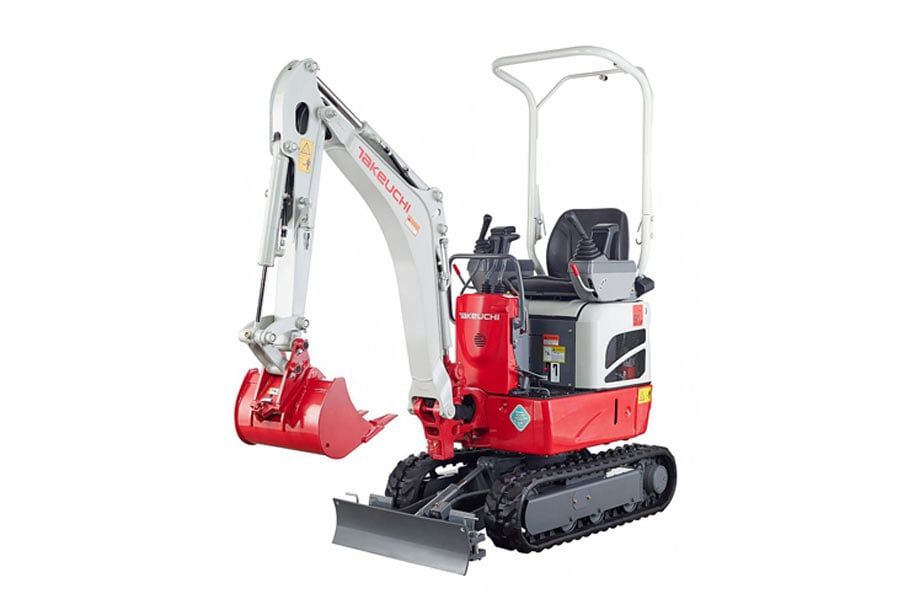
| Digging in a basement, indoors or in a garden with narrow access | up to 1.5 t | TB210R |
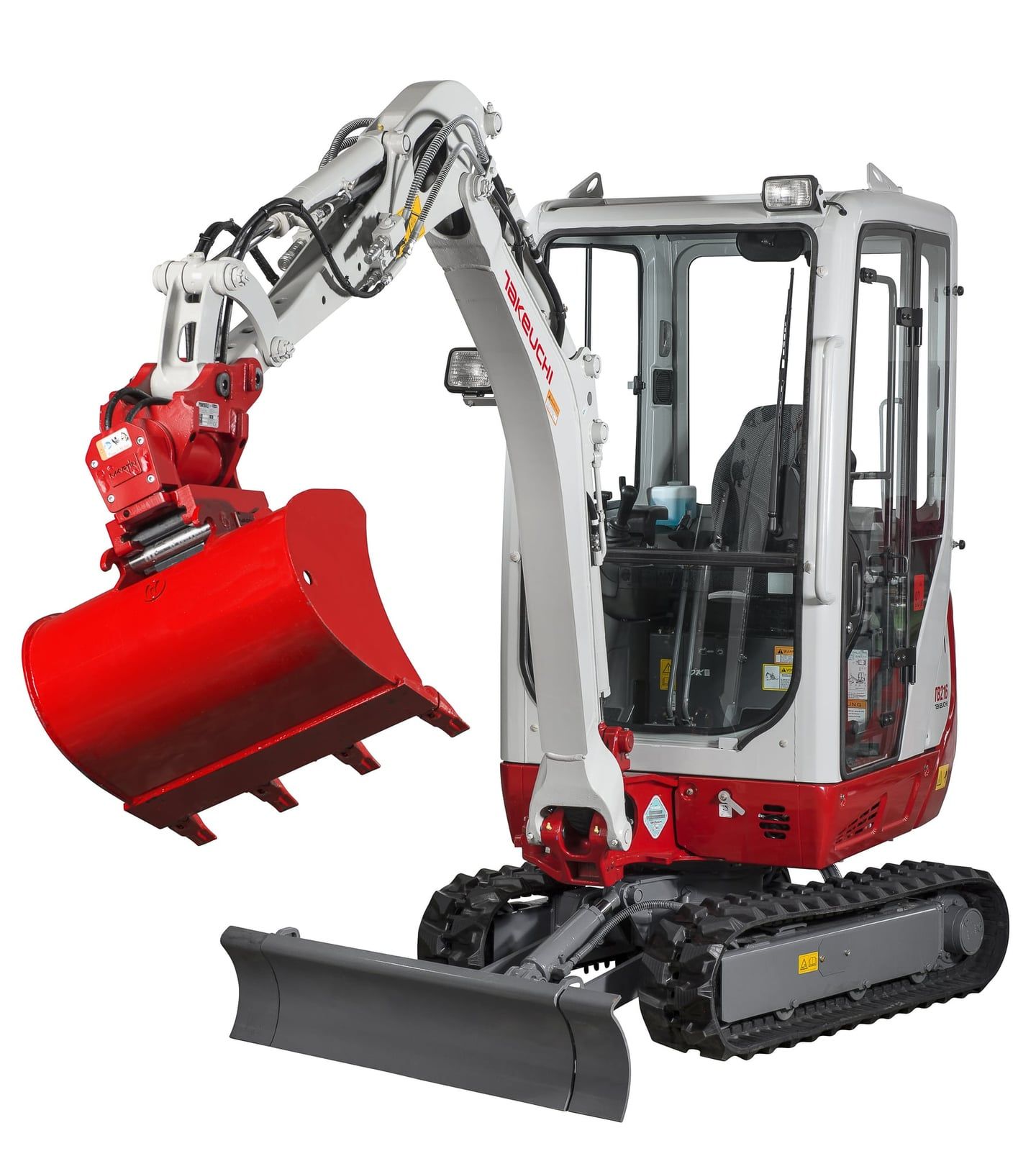
| Water and sewer connections, fence foundations, terrace, pond, drainage | around 2 t | TB216, TB217R |
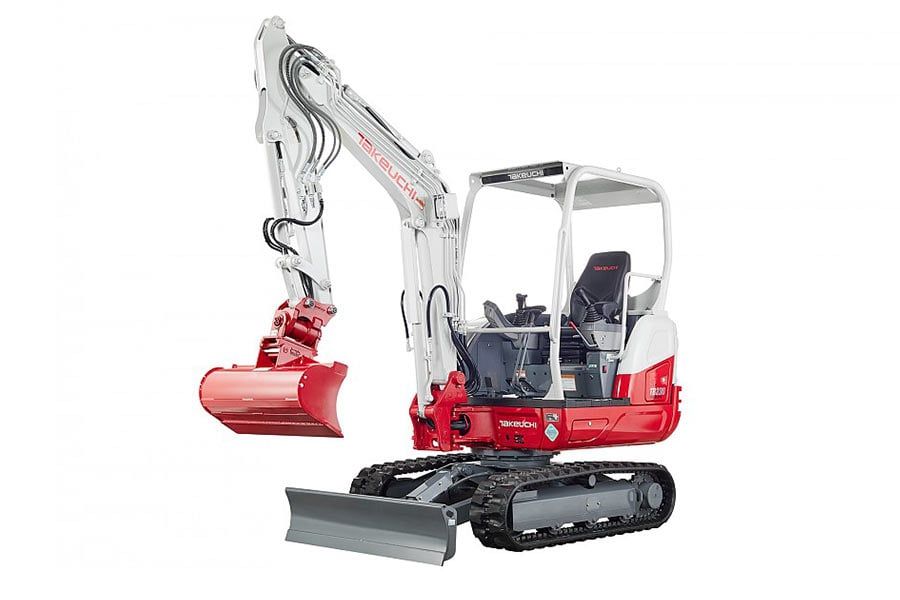
| Strip foundations for a house, utility networks, swimming pool | 2.5 – 4 t | TB225, TB230 |
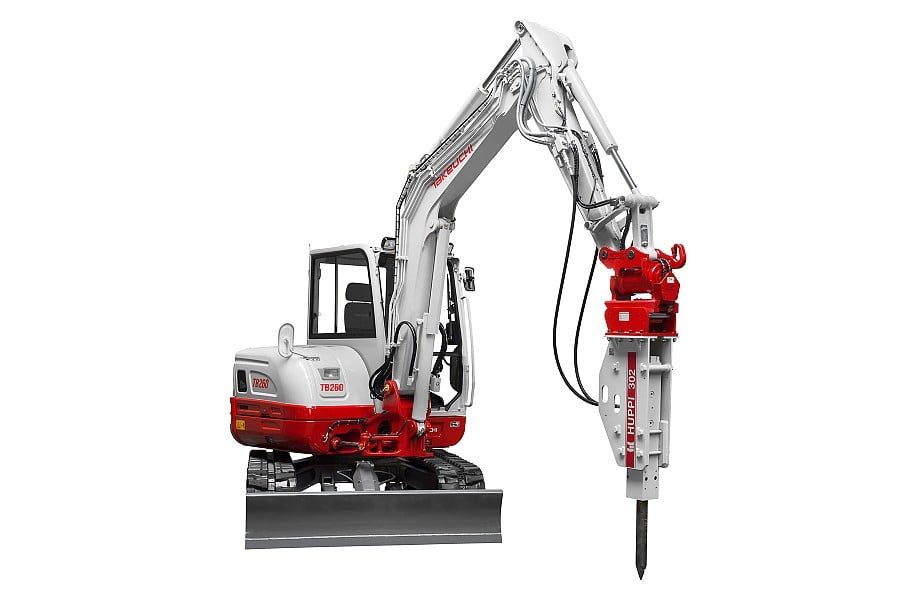
| Basement, sewers, slope grading, demolition with a breaker | 4 – 6 t | TB240, TB260 |
| Larger earthworks, deeper excavations, loading lorries | 7 – 9 t | TB370, TB290-2 |
| Large excavations and demolition with a heavy breaker | over 15 t | TB2150 |
For a larger volume of work, it pays to go one class up. A heavier machine has a longer reach and a bigger bucket, so it gets more done in a day.
Digging depth
Every machine has a maximum digging depth. Choose a machine that can reach the depth you need with some margin to spare. At maximum reach, digging is slower and less precise.
| Machine | Weight | Max. digging depth |
|---|---|---|
| TB210R | 1,150 kg | 1.76 m |
| TB216 | 1,960 kg | 2.39 m |
| TB225 | 2,520 kg | 2.58 m |
| TB230 | 3,020 kg | 2.84 m |
| TB240 | 4,220 kg | 3.47 m |
| TB260 | 6,020 kg | 3.74 m |
| TB290-2 | 8,820 kg | 4.41 m |
| TB2150 | 15,850 kg | 5.20 m |
For utility connections, the depth is set by the design drawings or by the utility operator. Water pipes are laid below the frost line, sewers according to the required fall. If you do not know the depth, check the design drawings before you choose a machine.
Will the machine get onto the plot? Width and height
The most common mistake is that the machine will not fit through the gate or under an archway. Measure the narrowest point and the lowest point on the way to the dig (gate, gap between the house and the fence, archway, tree branches).
The smallest mini excavators have a variable-width undercarriage. They retract it to get through and extend it for work, so that they are more stable:
| Machine | Width retracted – extended | Height |
|---|---|---|
| TB210R | 750 – 1,020 mm | 2,190 mm |
| TB217R | 980 – 1,300 mm | 2,345 mm |
| TB216 | 1,055 – 1,300 mm | 2,360 mm |
| TB225 | 1,100 – 1,500 mm | 2,350 mm |
| TB230 | 1,460 mm | 2,540 mm |
Pay particular attention to the height. Even though the TB210R narrows to 750 mm, it is 2.19 m high with its canopy. So it may not get into a basement or through a standard door. Tell us the dimensions when you order and we will check which machine will get through.
Ground: lawn, paving, soft ground
Mini excavators usually run on rubber tracks, which spread the machine’s weight and are gentle on hard surfaces. Even so:
- Lawn: do not turn on the spot, as the tracks will tear up the grass. Turn gradually, and on soft ground lay boards or steel sheets under the tracks.
- Paving and asphalt: the tracks will not damage the surface, but sharp stones and gravel under the tracks can scratch paving. Sweep the surface before driving on it.
- Soft and waterlogged ground: the machine can sink or tip. Drive onto the plot when the ground is dry, or over boards laid down for the purpose.
Short tail swing: R and FR
Models with the letter R (for example the TB325R) have a shortened tail. When slewing, they barely extend beyond the undercarriage, so you can work right next to a wall or fence, or within a single traffic lane.
FR models (for example the TB257FR) have an offset boom and zero tail swing. When slewing, they stay within the width of the tracks, so they suit the narrowest streets and yards.
Attachments by machine size
Attachments are chosen according to the weight of the excavator. A selection from the price list, daily prices excl. VAT (1 – 19 days):
| Attachment | Machine 1.5 – 3 t (e.g. TB216) | Machine 3 – 6 t (e.g. TB240) |
|---|---|---|
| Hydraulic breaker | HUPPI 72 (1 – 2 t) €35, HUPPI 92 (1.5 – 2.5 t) €40 | HUPPI 102 (2.5 – 4 t) €55, HUPPI 302 (3.5 – 6 t) €70 |
| Earth auger | EALX2500 (1.5 – 3 t) €35 | EAL4500 MAX (3 – 8 t) €45 |
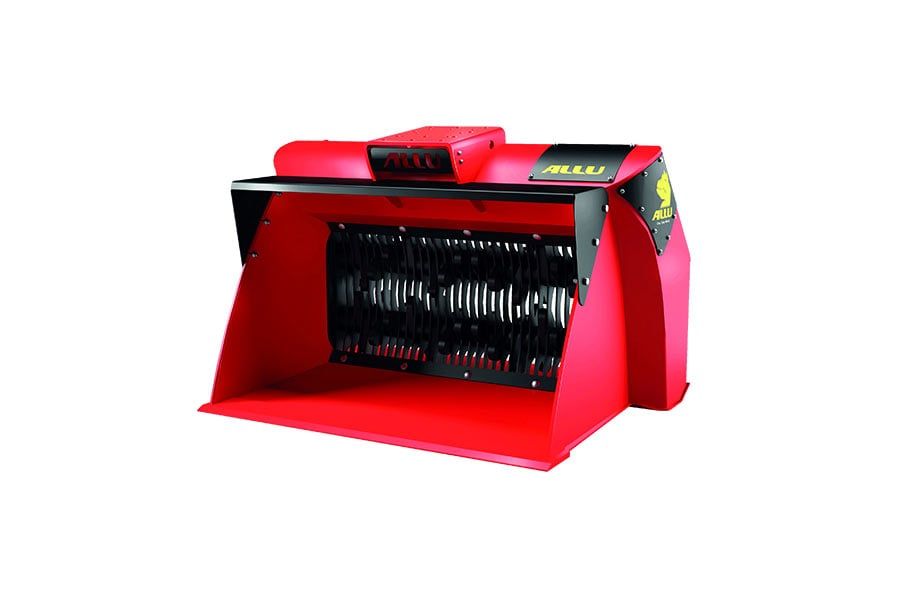
| Screening bucket | mechanical, 1.5 – 6 t €15 | hydraulic, 3 – 4 t €70 |
On the page of every excavator on our website, you will find the attachments that suit it. We write more about screening soil in our article Screening bucket.
Digging safely
A selection from the operating and maintenance instructions that apply to rented machines:
- Before digging, find out where underground services run (gas, electricity, water, telecoms). Ask the utility operators to mark them out; this can take several days.
- Keep the machine as far from the edge of the excavation as possible and do not dig underneath the machine. The edge of the excavation can collapse under the machine’s weight.
- Do not turn on a slope or drive across it. When driving on a slope, keep the bucket 20 to 30 cm above the ground.
- Fence off the working area and do not let anyone within reach of the slewing arm.
- Do not use the bucket to break things by striking them. Concrete and rock call for a hydraulic breaker.
Machines may only be operated by trained persons. If you have no experience with a mini excavator, you can try out the machine with us before you rent it.
Still not sure which one to choose?
Call your nearest branch or send us an enquiry. Tell us what you need to dig, how deep, and how wide the narrowest point on the way is, and we will recommend a suitable size. The prices of all machines are in the price list; for more on costs, see our article How much does excavator hire cost?.